Climate Action Network Australia: Climate Change, Global Warming, Green Power NOT Coal Power, Greenhouse Action in Australia geosequestration CCS, carbon capture and storage, energy efficiency, demand management, no nuclear, unite for renewables
|
|
|
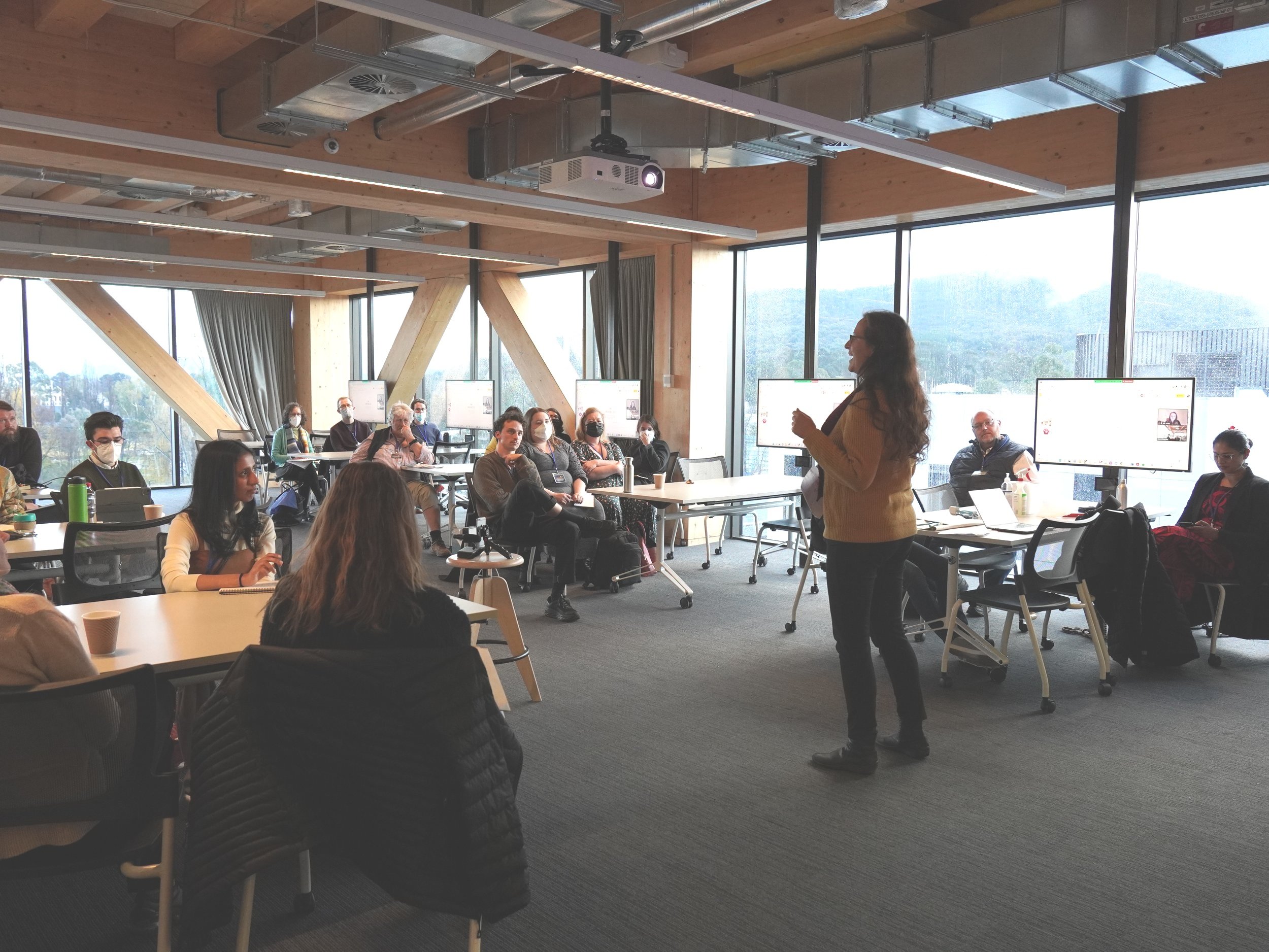
The 2008 Climate Action Network Australia (CANA) Conference was a sell-out event on 28 & 29 April. Thought-provoking presentations and panel discussions ensured that Day 1 attendees, who filled the venue to full-house capacity of 160, received up-to-the-minute reports on latest climate science, issues of equity and justice and the challenges facing Australia's policymakers and businesses.
To bring yourself up to date see the conference website for speaker list, the agenda and download the presentations.
|
CANA's submission to the Garnaut Review
Key Tests for an Emissions Trading Scheme
An emissions trading scheme could be an efficient and effective way to reduce Australia's greenhouse gas emissions, or it could be an elaborate ruse designed to shift responsibility and wealth. It all depends how it is designed.
This paper outlines the key things to get right in an emissions trading scheme to ensure that it plays a role in preventing dangerous climate change.
Sign up to CANA's mailing list
Sign up to CANA's mailing list to get key climate change announcements, events and reports (less than one email per fortnight).
What was the result of the Bali Climate Negotiations?
This scorecard from CANA and Members scores the outcome of the negotiations and the role that Australia played.
For the full story see the detailed reasons behind the scorecard
Climate Change: Negotiations Guide
Our Climate Change: Negotiations Guide gives more information on what the international climate change negotiations (including the Bali meeting) are about, what Kyoto is and how it works, and what other options there are (or aren't).
Australia's Mitigation Potential Australia received a special deal when the Kyoto Protocol first commitment periods were negotiated (an 8% increase, versus an average 5% decrease from other developed countries). The post-2012 targets are currently being negotiated, at the UN negotiations, and this report explores what potential Australia has for reducing our emissions, and how this compares to other countries.
Australia's Mitigation Potential, or: why Australia should not receive another special deal.
The Climate Institute has prepared a report on the economic impacts of Australia taking emission reduction targets, Leader, Follower or Free Rider that shows that Australia becoming carbon neutral by 2050 is consistent with strong economic growth, and that Australia would benefit if it were to take a leadership position on targets.
CANA busts the Myths of Climate Change There are a number of Climate Change Myths that get trotted out, and this report systematically debunks each of them. It shows:
- An "aspirational" global goal with voluntary action won't stop climate change. We need a Kyoto-style agreement incorporating targets for developed countries if we are to prevent dangerous climate change.
- A comparison of Chinese and Australian federal climate change plans show that China is taking more action.
- There is already a global emissions trading scheme set up under Kyoto, currently about $30bn and reducing global emissions by roughly the same as Australia's total emissions per year.
- Australia has a clear obligation to act on climate change - and our actions will make a difference on the world stage.
Full report: Myths Debunked
Turning Down the Heat: A Climate Change Action Agenda for Australia CANA has launched a comprehensive set of policies required to avoid dangerous climate change, and to strengthen our economy. First we need to start with a target to reduce our climate change pollution by at least 30% by 2020. Then implement a set of policies to ensure we meet this target, create a safe climate for our children, build employment and ensure our economy is well placed to compete in the new carbon constrained world. Turning Down the Heat is available here.
25% Renewable Energy by 2020 If we introduced a 25% renewable energy target by 2020 we would not only fight climate change, it would deliver at least 16,600 new jobs for Australians, generate $33 billion in new investment and create enough renewable electricity to power every home in Australia.A comprehensive plan for 25% renewable energy by 2020.
Climate Change will Hurt Australian Agriculture Australia's agricultural production will decline by between 16 and 27 per cent if climate change is left unchecked, according to a new study by the Center for Global Development. World agricultural production output will drop by between 3 and 16 per cent with developing countries facing the worst impacts. India faces a drop in production of up to 40 per while war torn Sudan faces a collapse in output of as much as 56 per cent. Find out more here.
Emissions Trading Establishing a cost of carbon through emissions trading could help us substantially reduce our greenhouse pollution OR it could be an elaborate way to disguise a lack of action and transfer wealth to polluters. Read the important things to get right for emission trading to be effective and
CANA's submission into the Federal Government's Emissions Trading Taskforce
Adapting to Climate Change: What's Needed in Poor Countries and Who Should Pay
Oxfam's new report on what it will cost poor countries to deal with climate change, and who should be responsible for paying is a real eye opener. Oxfam calculate that the costs of adaptation for poor countries will be at least $50bn per year, and that Australia should be providing 2.9% (or about $1.5 billion). The longer that we take to reduce our greenhouse pollution, the more damage we cause and the higher our responsibility is. Full report here
IPCC: the science of climate change The UN's Intergovernmental Panel on Climate Change (IPCC), a panel of over 2,500 scientists, report every 6 years. They have released 3 of the 4 reports for 2007:
The first is a definitive guide to the science of climate change.
The second is the impacts, adaptation and vulnerability of natural and human systems around the world.
The third is how we stop dangerous climate change: Mitigation of Climate Change
The UN Foundation has released a report, Confronting Climate Change: Avoiding the Unmanageable and Managing the Unavoidable it identifies when dangerous climate change kicks in, and a road map for avoiding dangerous climate change.
96% of government subsidies for energy and transport go to fossil fuels - only 4% to renewables and energy efficiency
Australian Governments Subsidise Fossil Fuels over $9billion a year and renewable energy and energy efficiency less than $400million per year. Which goes to show that we have the money to solve the problem - we just have to shift from subsidising the problem to subsidising the solution.Full report.
Australian Climate Justice Program Want to know how the law is being used as a force for good in the fight against dangerous climate change? Visit www.cana.net.au/ACJP
Green Electricity Watch 2007 Some of Australia's leading environmental groups have joined forces to give you more information on the best choices for clean power. Australia's electricity retailers are ranked based on their greenhouse policies and on the products they provide. Find out all about it at: www.greenelectricitywatch.org.au.
Renewables CAN Provide Baseload A new and informative paper on how energy efficiency and renewables can provide baseload without the climate change emissions of coal. Download paper here
Climate Change will affect all of us In a hotter and more volatile world, both rich and poor stand to lose. Those already affected by poverty, malnutrition and disease will face new hardships. In Australia our industries, livelihoods and public health will face serious threats from drought, disease and extreme weather events. Where we live, and our cost of living will be affected. This web resource details the social impacts of climate change and why we must take urgent action to avoid the worst impacts of climate change.
Climate Change will impact development objectives. The Climate Change and Development Roundtable have commissioned a report on the impacts of climate change in the Asia Pacific Region, and recommendations as to how Australia should react.
National Electricity Market increases greenhouse pollution
Peak social, environment and business groups have called for environmental and social
objectives in the National Electricity Market - to improve efficiency, reduce greenhouse pollution and protect
vulnerable consumers.
Power for the People Declaration
Nuclear is No Answer to Climate Change The "nuclear debate" has been rife with assertions, and low on facts. CANA members are united in saying that nuclear power is not the answer to climate change.
CANA's nuclear fact page
Climate Justice: A Fair Share of the Atmosphere Friends of the Earth Australia have released a report that emphasises the humanitarian reasons to stop dangerous climate change. Climate Justice: A Fair Share of the Atmosphere.
Climate Change and Water How will climate change affect the water supplies where you live? A comprehensive and easy to read summary of Australian research on the impacts of climate change on our water can be seen at our website.
Except where otherwise explicitly authorised, any material on this website which may be construed as electoral material or an electoral matter under
any State or Commonwealth Law is authorised by Julie-Anne Richards on behalf of The Climate Action Network Australia, Level 13 Jones St , Ultimo NSW 2007.
|
|